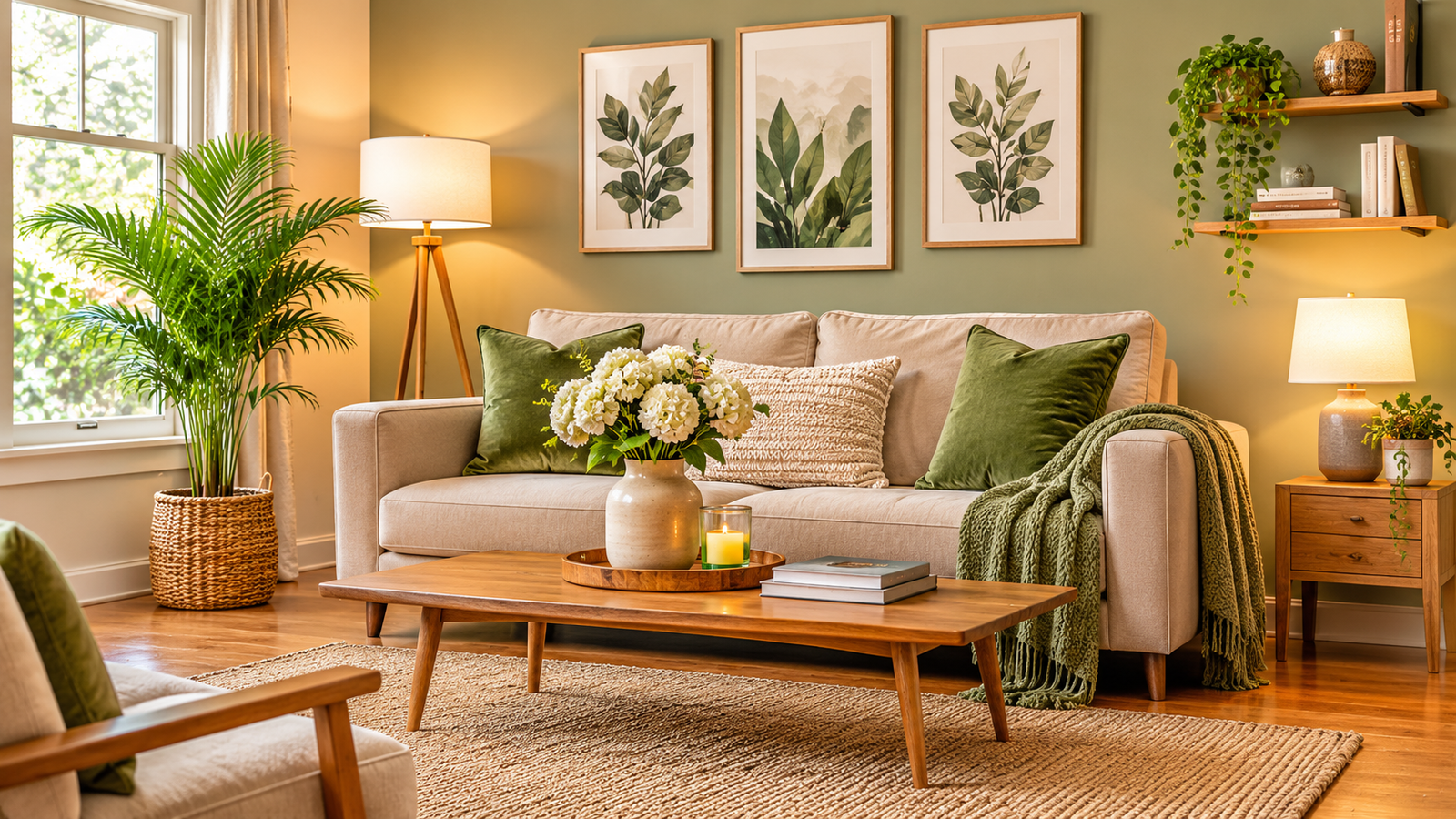
Decorating a compact living room often feels like solving a puzzle where every inch counts. Many homeowners push every piece of furniture flat against the walls in hopes of opening up the center of the room. In practice, that arrangement frequently leaves an empty void in the middle while blocking doors, vents, or window light.
A functional small living room layout starts with how you actually use the space each day: where people sit, where natural light enters, how conversation flows, and how easily you can walk from one side of the room to the other. Below are seven proven small living room layouts that balance comfort and visual space.
1. Float the Sofa Away From the Wall
Pulling your sofa even six to twelve inches away from the wall can change the proportions of a tight room. A small gap behind the backrest creates visual depth and allows wall sconces, curtain drapery, or subtle accent lighting to breathe.
If your room connects to a dining area or hallway, floating the sofa so its back defines a subtle boundary gives the seating area structure without building a heavy wall or divider.
2. Choose Open-Legged Furniture
Heavy, skirted sofas and solid block-base coffee tables visually weigh down a compact floor plan. Furniture with exposed wooden or metal legs lets light travel underneath and shows more of the floor surface, which tricks the eye into reading the room as larger.
- Look for sofas and accent chairs with tapered or slim legs.
- Pair them with an open-frame or glass-and-wood coffee table rather than a solid storage trunk.
- Keep lower shelves airy instead of cramming every cubby with objects.
3. Keep Walkways Clear
Even the best furniture arrangement fails if you have to sidestep sharp corners every time you cross the room. Aim to leave clear pathways between entry doors, seating, and balcony or hallway exits so traffic moves naturally around—not through—the main seating zone.
Avoid placing deep side tables or oversized indoor planters directly in high-traffic paths where someone might bump into them in low light.
Leave comfortable breathing room between the front edge of your sofa and the coffee table so people can sit down and stand up easily without shifting the table every time.
4. Anchor With a Right-Sized Rug
A tiny "floating" rug in the middle of a small room often makes the space look choppy. Instead, choose an area rug large enough that at least the front legs of your main seating rest comfortably on it.
In narrow rooms, orienting the rug lengthwise along the main seating axis helps stretch the visual line of the room and ties mismatched seating pieces into one cohesive zone.
5. Use Vertical & Wall-Mounted Storage
When floor space is limited, look upward. Wall-mounted media consoles, slim floating shelves, and tall bookcases draw the eye vertically and free up valuable floor area for seating and movement.
To keep walls from looking cluttered, group books, ceramics, and framed art thoughtfully, and leave open negative space around your focal points.
6. Swap Bulky Tables for Nesting Pieces
A large fixed coffee table can dominate a small living room and make reaching the sofa awkward. Nesting tables give you flexible surface space for drinks, books, or a tray when guests visit, while tucking neatly together when you want extra floor room.
Another space-smart option is a slim side table or C-table that slides close to the sofa arm without taking up a wide footprint.
7. Zone With Light Instead of Partitions
Solid room dividers or tall shelving units can block daylight and make a small living room feel boxed in. If you need to separate a living area from a workspace or dining corner, use layered lighting—such as a warm floor lamp beside the lounge chair and softer task lighting at the desk—to define each zone naturally.
Keep window treatments light and mounted close to the ceiling so daylight floods across the room during the day.
Common Small-Room Layout Mistakes to Avoid
- Buying oversized sectional sofas: Deep, sprawling sectionals often overwhelm small rooms and block doorways. Two-seater sofas plus a compact armchair usually offer better flexibility.
- Relying on a single overhead light: One harsh ceiling light casts flat shadows. Layer table lamps, floor lamps, and warm bulbs for a more inviting evening atmosphere.
- Over-accessorizing every surface: Too many small decor items create visual noise. Pick a few intentional pieces—like a textured throw, a ceramic bowl, and a leafy plant—and let them stand out.
Putting Your Small Living Room Layout Together
Start by measuring the room and marking where doors swing and windows sit. Test your main seating and coffee table placement with painter's tape on the floor before moving heavy pieces, and adjust one element at a time until the room feels balanced, bright, and easy to live in.