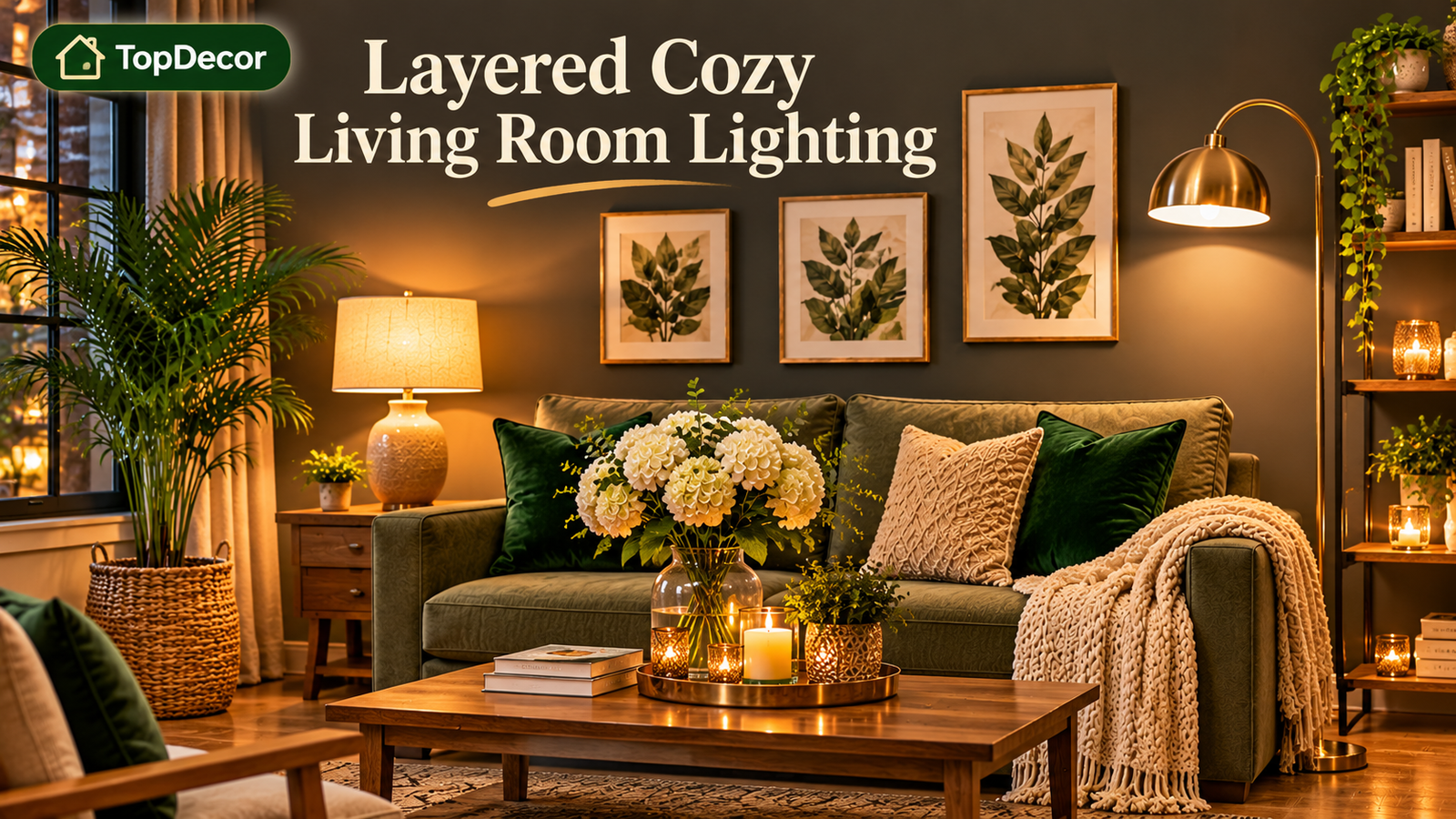
Relying on a single central ceiling fixture is one of the easiest ways to make a living room feel flat. Overhead light often casts shadows across seating and leaves corners dim, making the room feel smaller than it is.
The Three Layers of Light
Thoughtful living room lighting balances three distinct layers so you can adjust brightness to match the moment:
- Ambient Light: General, soft illumination across the room—from ceiling fixtures, wall sconces, or wide-shade floor lamps.
- Task Light: Focused light where you read, work on a laptop, or fold laundry—such as an articulated reading lamp near a chair.
- Accent Light: Subtle pools of light that draw attention to framed artwork, textured walls, or indoor plants.
Where to Place Floor & Table Lamps
Position lamps at varied heights around the perimeter and seating edges rather than clustering all light in one spot. A floor lamp placed slightly behind or beside an armchair gives clean reading light without shining directly into someone's eyes across the room.
On side tables or low consoles, choose shades that diffuse light downward and outward so the bulb itself isn't glaring from seated eye level.
For relaxing living rooms, warm-white bulbs (around 2700K–3000K) usually feel much cozier than cool daylight bulbs in the evening.
Choosing Warm Bulb Color Temperatures
Try to keep bulb color temperatures consistent within the same room. Mixing a stark cool bulb in one lamp with a warm bulb in another can create patchy color shifts across walls and fabrics.
Reducing Screen & Wall Glare
If your living room includes a television, avoid placing bright lamps directly opposite the screen where reflections bounce off the glass. Soft bias lighting behind or beside the media console often eases eye strain during evening watching.
Highlighting Art, Plants & Shelves
A small picture light, a low uplight near a leafy plant, or warm shelf lighting adds dimension after dark and makes the room feel layered even when main lights are turned low.
Quick Evening Lighting Checklist
- Turn off harsh overhead lights when winding down and use two or three lower lamps instead.
- Use dimmers or smart plugs where possible so brightness can be tuned gradually.
- Check lamp cord routing so cables stay tucked neatly along baseboards and out of walkways.
Lighting That Adapts to Your Routine
Start with one or two well-placed lamps in your most-used seating corner and build outward. Small adjustments in lamp height and warmth can transform the mood of a living room in a single evening.